What does “walkable” really mean in Duck? If you love the idea of strolling to the boardwalk, browsing local shops, and heading toward the beach without making every trip a car trip, Duck can be a compelling place to look. The key is understanding that walkability here is real, but it is also very location-specific, and knowing that can help you choose a home that fits the lifestyle you actually want. Let’s dive in.
Duck walkability starts in the village
Duck is intentionally shaped around a pedestrian-friendly village core. Town planning materials describe Duck Village as the heart of town, where small shops, restaurants, offices, parks, and boardwalks come together to create the experience many people picture when they think about Duck.
That village-centered layout gives Duck a different feel from a typical beach town strip. Instead of a dense urban grid, you have a coastal residential setting with a defined walkable core. For buyers, that means some areas support an easy on-foot lifestyle far more than others.
The boardwalk anchors daily life
One of Duck’s most defining features is the Duck Boardwalk, which runs nearly a mile along the Currituck Sound. It can be accessed from the Town Park and other points throughout the village, making it a central part of getting around and enjoying the setting.
The boardwalk is designed for a slower pace. Town rules prohibit motorized vehicles, and bicycles must be walked or left at racks rather than ridden on the boardwalk. That tells you a lot about the lifestyle here: walking, pausing, enjoying the water views, and making short local trips are part of the appeal.
The Duck Trail expands your options
Beyond the boardwalk, the Duck Trail helps connect the full length of town. This six-mile multi-use path runs through Duck, and in the commercial village area it becomes sidewalks and dedicated bike lanes on both sides of Duck Road.
If you are comparing homes, this matters. A property does not have to sit directly beside the boardwalk to feel connected to town. Quick access to the Duck Trail or the village sidewalks can still make day-to-day movement easier and more enjoyable.
Town Park adds another walkable destination
Duck Town Park adds 11 acres of soundside open space to the mix. The park includes trails, a kayak and canoe launch, a playground, an amphitheater, and the Town Green.
For many buyers, this is part of what makes the village area so appealing. You are not just walking to stores or restaurants. You are also walking to open space, local events, and a quieter soundside setting that supports the relaxed pace many people want in a coastal home.
What homes near the village look like
Duck’s housing pattern is different from what some buyers expect when they hear the word walkable. The town says Duck Road is the main commercial corridor, while many residential roads are private cul-de-sacs extending east from the highway. Development density is also limited by zoning and septic constraints.
In practical terms, homes closest to Duck Village and the boardwalk usually offer the most convenient access to shops, dining, and the park. Homes deeper in residential sections often feel more tucked away and private. Neither option is better across the board. It depends on whether you value convenience, privacy, or a balance of both.
Most homes are single-family in character
Duck remains predominantly single-family in character. Town budget materials cite 2,941 housing units based on 2019 ACS data, with 83% identified as single-family homes.
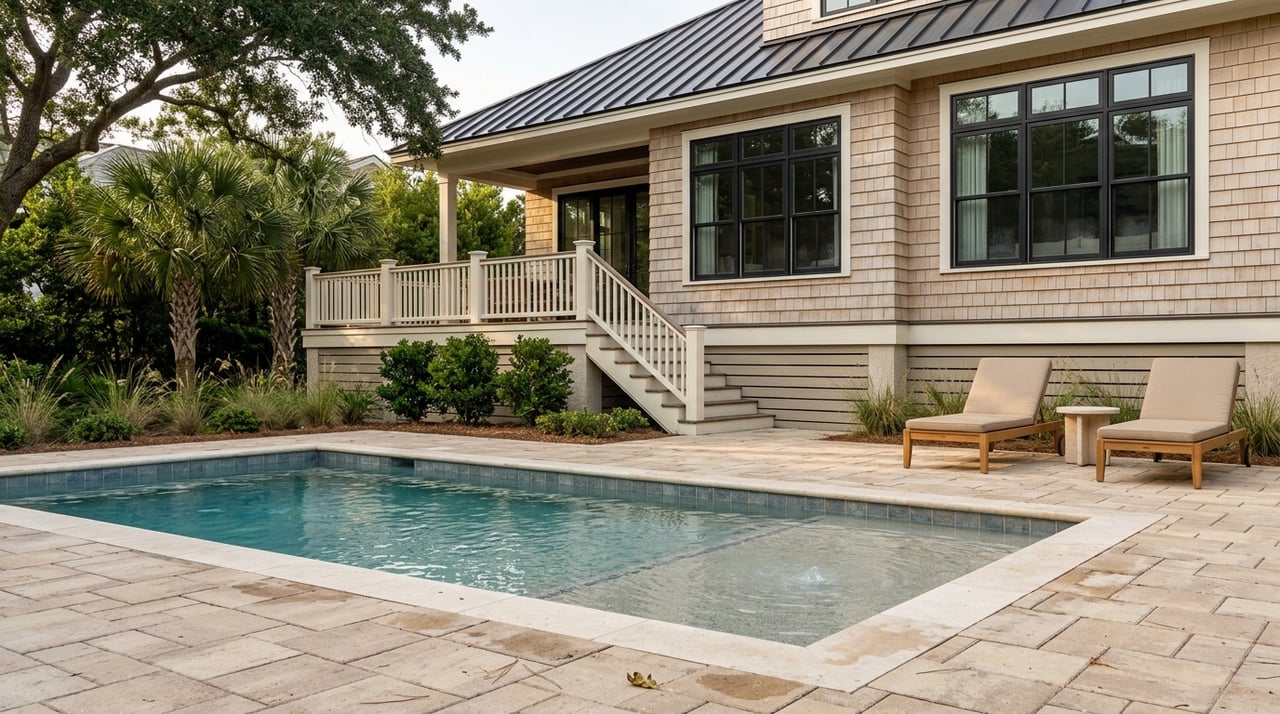
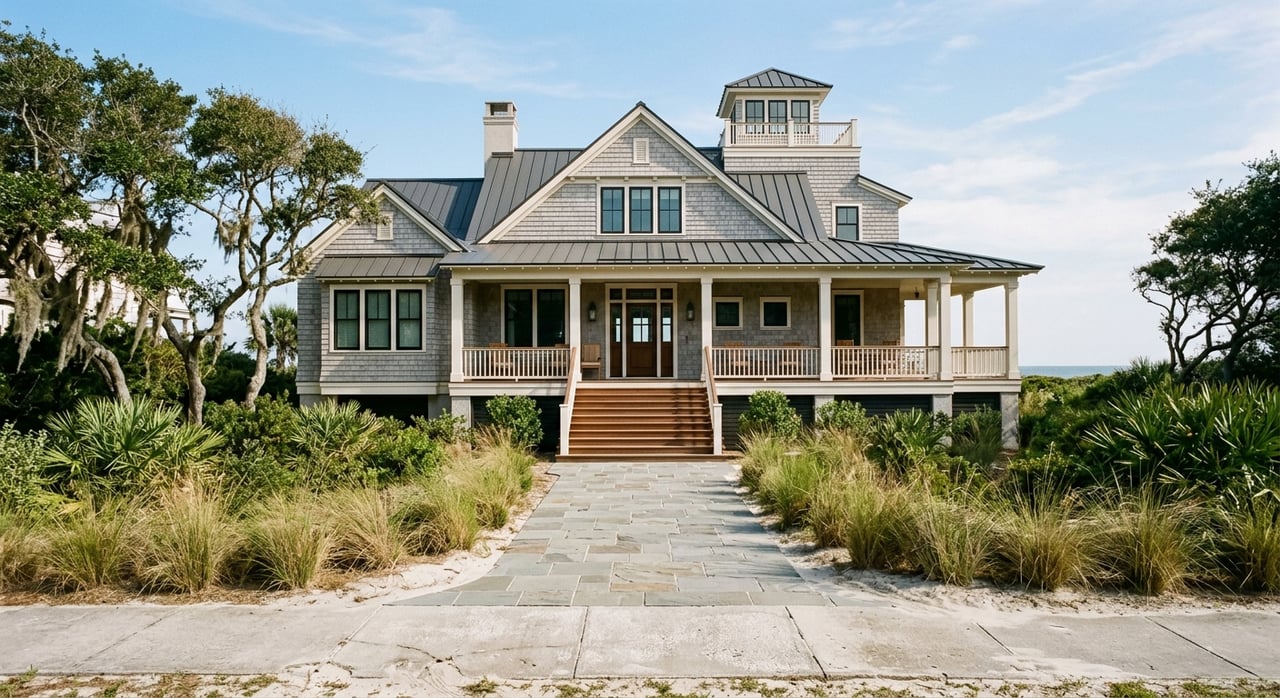
Many detached homes are two to three stories of livable space over a parking area. On both the beach and sound sides, homes are often oriented toward the water, with outdoor living features such as patios and pools placed within the dune environment.
But housing types do vary
Single-family homes may define much of Duck’s housing stock, but they are not the only option. The town’s land-use plan notes that multifamily housing exists in different forms, including clustered homes with shared parking, and some taller buildings in town reach four stories.
The town also notes accessory dwelling units in residential and Village Commercial areas, along with apartments above businesses. When you look at walkable properties, it is smart to confirm whether a home is detached, part of a cluster, or in a more attached setting, since that can shape both privacy and day-to-day convenience.
Beach access works differently in Duck
This is one of the most important details for buyers to understand: Duck says there are no municipally owned beach accesses or soundside beaches. Instead, the town provides sound access through Town Park for kayak and canoe launching, plus day-use boat piers at the north and south ends of the boardwalk.
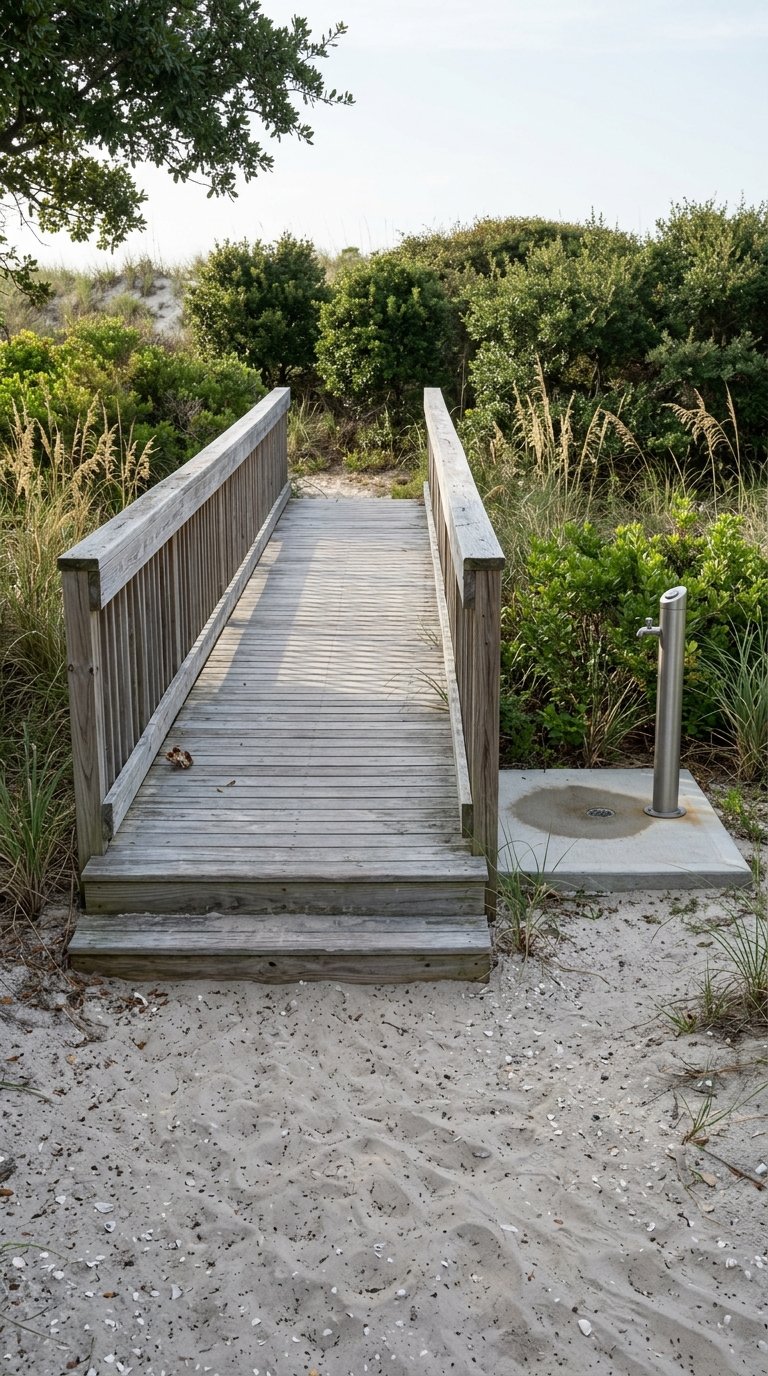
Ocean access is generally handled through community access points in subdivisions. So if you want a true walk-to-beach lifestyle, do not assume a nearby public beach lot will provide that access. You need to verify whether the property has deeded, HOA-managed, or neighborhood beach access.
Walkable can mean different things
In Duck, a home may be walkable to the village, walkable to a subdivision beach access, or walkable to both. Those are not always the same thing.
That is why two homes can both be described as “walkable” but offer very different lifestyles. One may place you near the boardwalk, Town Park, and shops. Another may be more connected to a neighborhood beach path while still requiring a bike ride or short drive for village activities.
A simple way to compare neighborhoods
If you are trying to picture how walkable a property will feel, it helps to think of Duck as a spectrum.
Most walkable locations
These are generally homes near Duck Village, the boardwalk, and Town Park. If you want the easiest access to shops, dining, soundside walks, and community gathering spaces, this is often the strongest fit.
Balanced access and privacy
These are homes in nearby residential neighborhoods with quicker access to Duck Road, the trail, or a subdivision path. They can offer a useful middle ground if you want convenience without being in the center of village activity.
Most private settings
These are often homes farther back in private cul-de-sac neighborhoods. They may offer a quieter residential feel, but everyday walkability can depend more on biking or driving.
Seasonality shapes the experience
Duck’s budget materials describe the town as having a large number of rental and second homes. That can influence how different parts of town feel at different times of year.
For some buyers, that seasonal energy is part of the appeal. For others, a quieter residential pocket may feel like a better long-term fit. If you are choosing between a full-time move, a second home, or an investment-oriented property, seasonality should be part of the conversation.
Questions to ask before you buy
A walkable lifestyle in Duck is possible, but the details matter. Before you move forward on a property, it helps to confirm exactly how the home connects to the places you care about most.
Here are a few practical questions to ask:
- Is the home walkable to Duck Village and the boardwalk?
- Is there deeded or HOA-managed beach access?
- How close is the Duck Trail or a sidewalk connection?
- Is parking private, on-site, or shared?
- Is the home detached, clustered, or part of a more attached setting?
- Will the area feel lively or quiet during the seasons when you plan to use it most?
Why local guidance matters in Duck
Duck rewards buyers who look beyond the listing headline and study how a specific property lives day to day. The difference between being near the boardwalk, near a neighborhood beach access, or near both can shape your experience far more than a simple map search suggests.
That is where local perspective becomes valuable. When you understand Duck’s village-centered layout, private residential roads, and neighborhood-based beach access pattern, you can make a much more confident decision about what “walkable” really means for you.
If you are considering a home in Duck, the right fit often comes down to the details behind the location. Jackson Dixon can help you compare properties with a clear understanding of access, setting, and the lifestyle each one offers.
FAQs
What makes Duck, NC walkable?
- Duck’s walkability is centered around Duck Village, the Duck Boardwalk, the six-mile Duck Trail, and Duck Town Park, which together create the town’s strongest pedestrian-friendly area.
Is the Duck Boardwalk close to all homes in Duck?
- No. The boardwalk is part of the village core along the Currituck Sound, so access depends on how close a home is to that part of town.
Does Duck have public beach access owned by the town?
- No. The town says there are no municipally owned beach accesses, so ocean access is typically provided through subdivision or neighborhood access points.
Are homes in Duck mostly single-family homes?
- Yes. Town budget materials say 83% of Duck’s housing units were single-family homes based on 2019 ACS data, though multifamily and clustered housing also exist.
What should you verify before buying a walkable home in Duck?
- You should confirm beach access type, proximity to the boardwalk and village, access to the Duck Trail, parking arrangement, and whether the home is detached or part of a clustered setting.