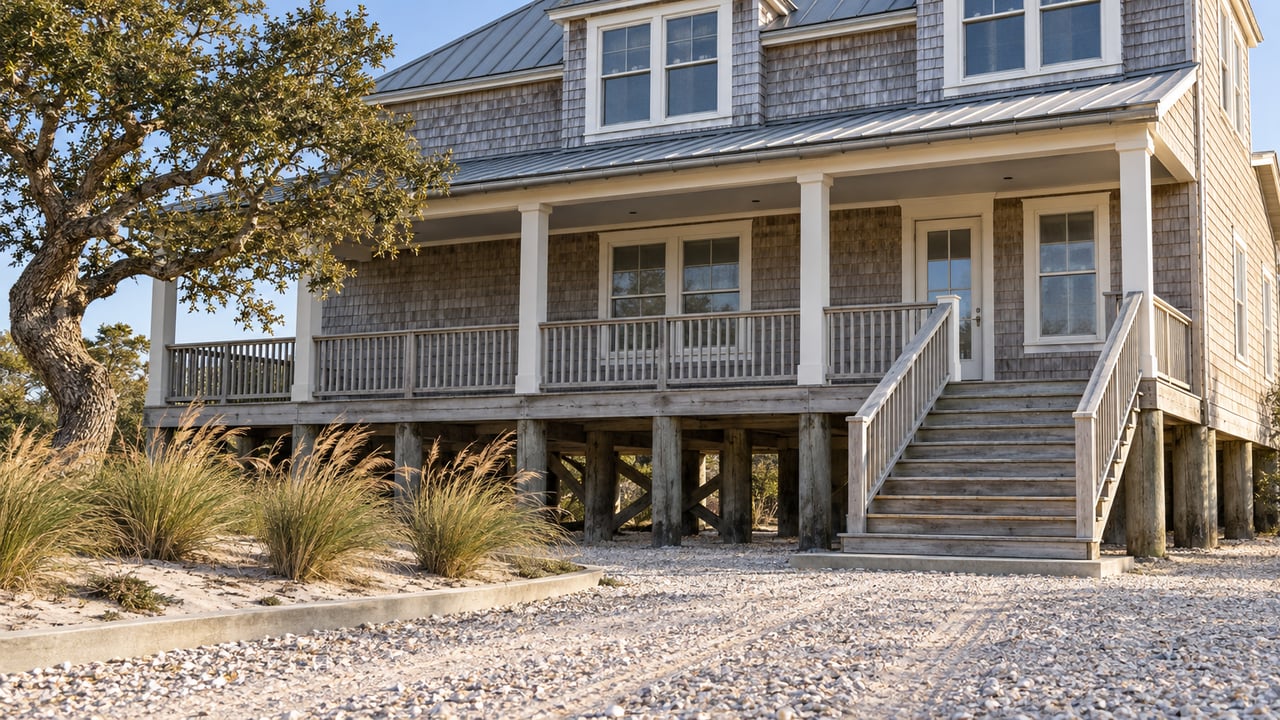
PBS North Carolina quotes Nancy Rascoe saying, "You need to know the old stories, and you need to know your young stories." The feature reports that Rascoe has been coming to the same stretch of Nags Head oceanfront since she was six months old, first at her grandmother's Nixon cottage, now at the Rascoe cottage a few doors down. Her family is one of dozens still tied to the row of weathered cedar-shingle cottages between mileposts 12 and 13, the collection once nicknamed the Unpainted Aristocracy and listed on the National Register of Historic Places since 1977.
For a buyer looking at one of these cottages today, that plaque does a lot of emotional work. It suggests permanence: a structure the town has agreed to protect, a neighborhood that cannot be quietly redeveloped out from under its history. Before you let that assumption shape an offer, it is worth understanding exactly what the designation does and does not do, because the two are further apart than most buyers expect.
The Designation Is Federal. Local Protection Depends on Local Rules.
National Register listing is an honor bestowed by the National Park Service, and by itself it places no restrictions on a private owner. It does not require approval before a renovation, an addition, or even a teardown, unless federal funding or federal tax credits are involved in the project. Any real teeth come from a local ordinance, typically a historic preservation commission with authority to approve or deny a certificate of appropriateness before exterior changes happen.
Nags Head does not have that mechanism for Cottage Row. A graduate planning studio from Virginia Commonwealth University's Masters of Urban and Regional Planning Program once drafted a Beach Cottage Row Historic District Plan at the request of Nags Head property owner Bill Flowers, intended to give the row exactly this kind of local review. The plan was never adopted by the Board of Commissioners. It exists as a study, not a code.
That single fact is the one a buyer needs before falling in love with the history. The federal listing preserves the row on paper and in the National Register's database. It does not preserve any specific cottage from the choices its next owner makes.
What the Plaque Suggests Versus What the Ordinance Says
| What buyers often assume | What the town's code actually provides |
|---|---|
| A historic preservation board reviews changes to the cottages | The VCU-drafted plan was never adopted |
| Demolition or major rebuilding is restricted | Nothing in Nags Head's Unified Development Ordinance blocks a private owner from demolishing a contributing cottage |
| The exterior must stay historically accurate | Most cottages on the row have already undergone major renovations, and nothing requires historical accuracy going forward |
| The federal designation carries local zoning weight | Local design review only applies to new commercial construction near the district, not to residential alteration within it |
What Has Already Happened to the Original Row
The best evidence that the designation has not frozen the district in place is the district's own history. The first oceanfront cottage went up around 1855, and by 1885 thirteen cottages stood along that stretch of beach. Of those original thirteen, nine are still standing today. Two were replaced with similar structures, one was destroyed by fire, and one was razed. The row that stands today, including well-known cottages like the nine-bedroom Buchanan Cottage, still the largest oceanfront home on the row, and Spider Villa, believed to be the oldest surviving cottage on the beach, is a district that has already absorbed loss and replacement while carrying the National Register label the entire time.
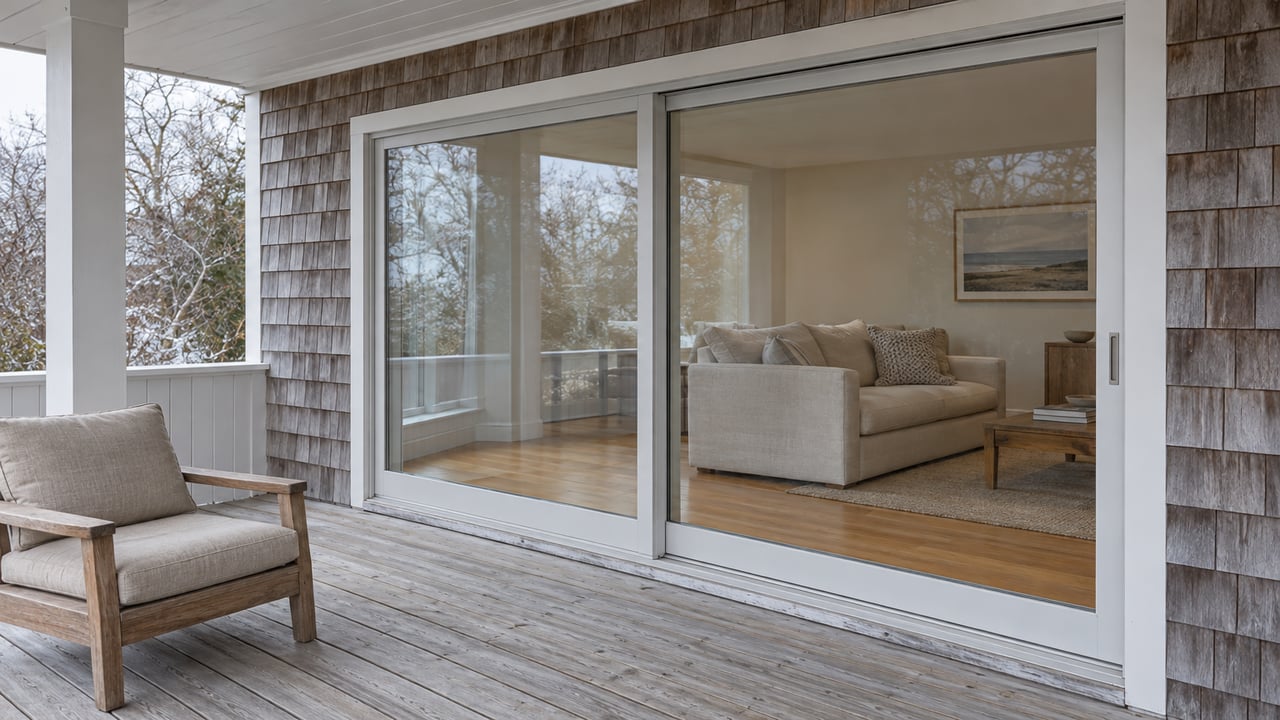
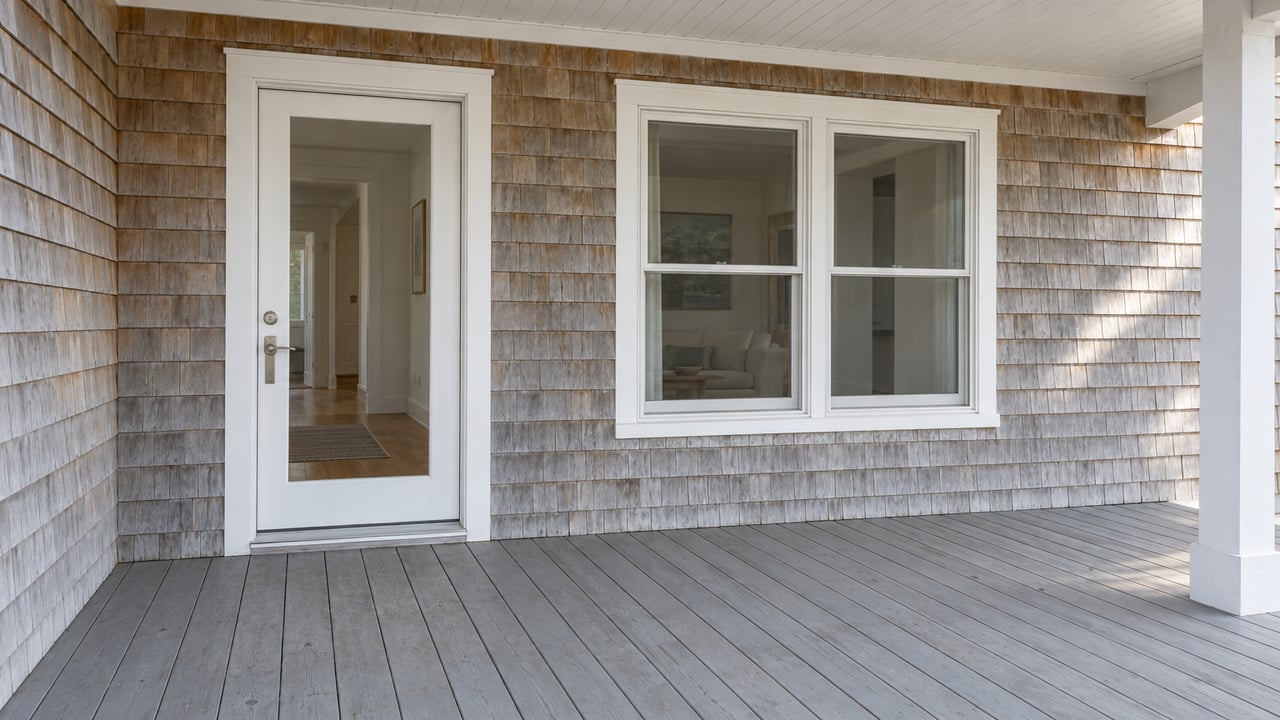
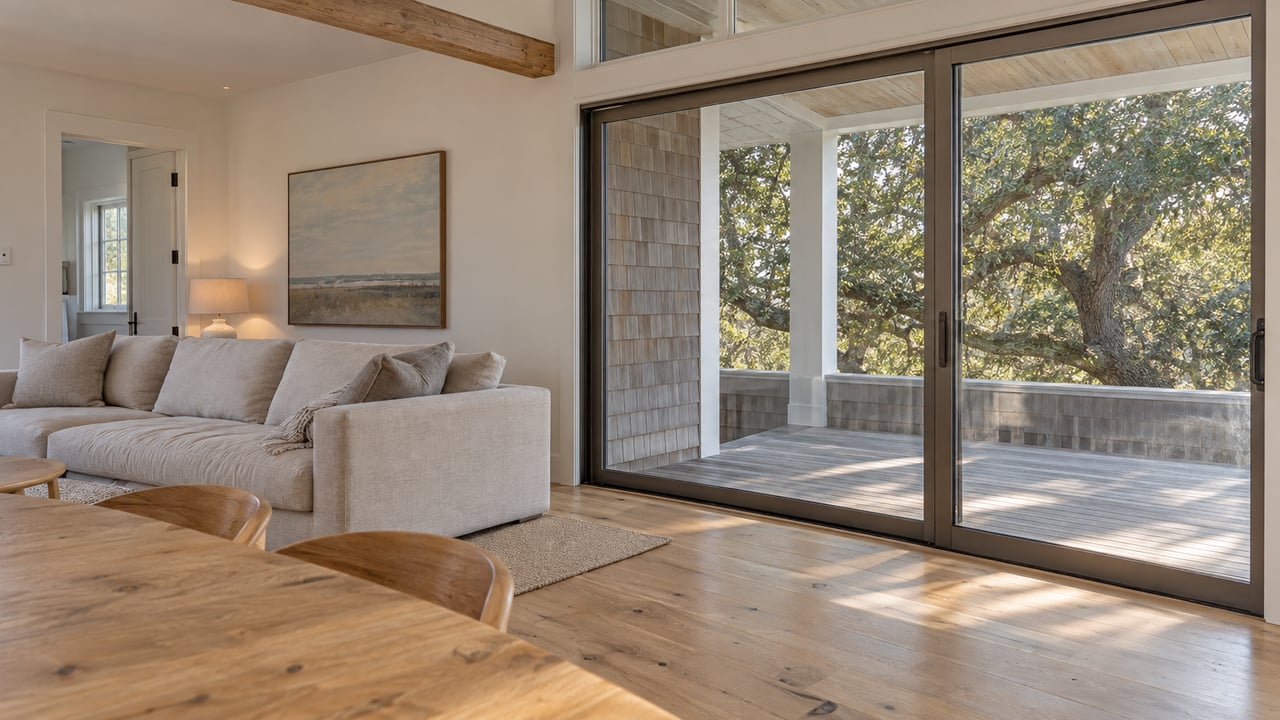
Most of the surviving cottages have also been substantially renovated over the decades, a detail confirmed in a PBS North Carolina feature on the district. Renovation is not a violation of anything. It is simply proof that "historic" has never meant "untouched" here, and it will not start meaning that because a buyer wants it to.
The One Rule That Does Reach the District, and Why It Doesn't Help Residential Buyers
Nags Head's Unified Development Ordinance does contain language tied to Cottage Row, but it is narrower than most buyers assume. Section 8.3.2.2 requires that when the Board of Commissioners reviews a Special Use Permit for new construction nearby, the board must find that the proposed building reflects the heritage of "Old Nags Head" and does not diminish the unique architectural character of the historic district. That standard governs new commercial buildings going up near the row. It has no application to what a private homeowner does to a contributing cottage itself.
The town has also been actively rezoning the commercial corridor across NC 12 from the row, adopting a moratorium in October 2023 on new non-residential development in that area while it worked out permanent zoning. That effort protects the district's setting, the view and feel of the corridor a buyer would drive through to reach the beach. It still is not a rule that reaches inside the property line of a Cottage Row cottage.
What This Means for Pricing and for Your Decision
Because the National Register listing carries no binding local protection, it also carries no separate zoning premium the way a true local historic district designation sometimes does elsewhere. A Cottage Row cottage trades primarily as an oceanfront Nags Head property, subject to the same market forces as any other lot in that location. Oceanfront sales in Nags Head happen infrequently enough that a single closing can swing a monthly median considerably, which is one more reason to treat the historic label as a story about the house rather than a pricing category of its own. Judge a Cottage Row cottage on its lot, its condition, and its rental history. The plaque does not add value the ordinance does not back up, and it does not protect value either.
If you are seriously considering a Cottage Row cottage, the practical steps are straightforward. Ask directly whether any deed restriction, easement, or family agreement limits future changes, since none of that protection comes from the National Register status itself. If preserving the cottage's current form matters to you, get that intention in writing rather than assuming the historic label will do it for you. And if you are drawn to the row because you want the flexibility to renovate or eventually rebuild, know that you likely have more room to do so than the plaque implies, provided you meet the same coastal construction and flood standards that apply to any oceanfront home in town.
Frequently Asked Questions
Have most of the surviving cottages been renovated? Yes. Most of the surviving cottages have already been renovated over the years.
Does the National Register listing prevent a future owner from tearing down a contributing cottage? No. The listing itself imposes no restriction absent federal funding, and Nags Head never adopted the local plan that would have created that kind of review. The district's own history includes cottages lost to fire and to demolition.
Is there any local rule tied to the historic district at all? Yes, but it applies to new commercial construction reviewed under a Special Use Permit near the district, not to what a homeowner does to an existing residential cottage.
If you are weighing a piece of Nags Head's history against the practical realities of ownership, that is exactly the kind of conversation worth having before you write an offer. Jackson Dixon has spent nearly four decades working this stretch of the Outer Banks and can walk you through what a specific Cottage Row property actually allows, not just what its history suggests. Search Properties to see what's currently available along the row and elsewhere in Nags Head.
This article is general information, not legal, tax or financial advice. Consult a qualified professional about your situation.